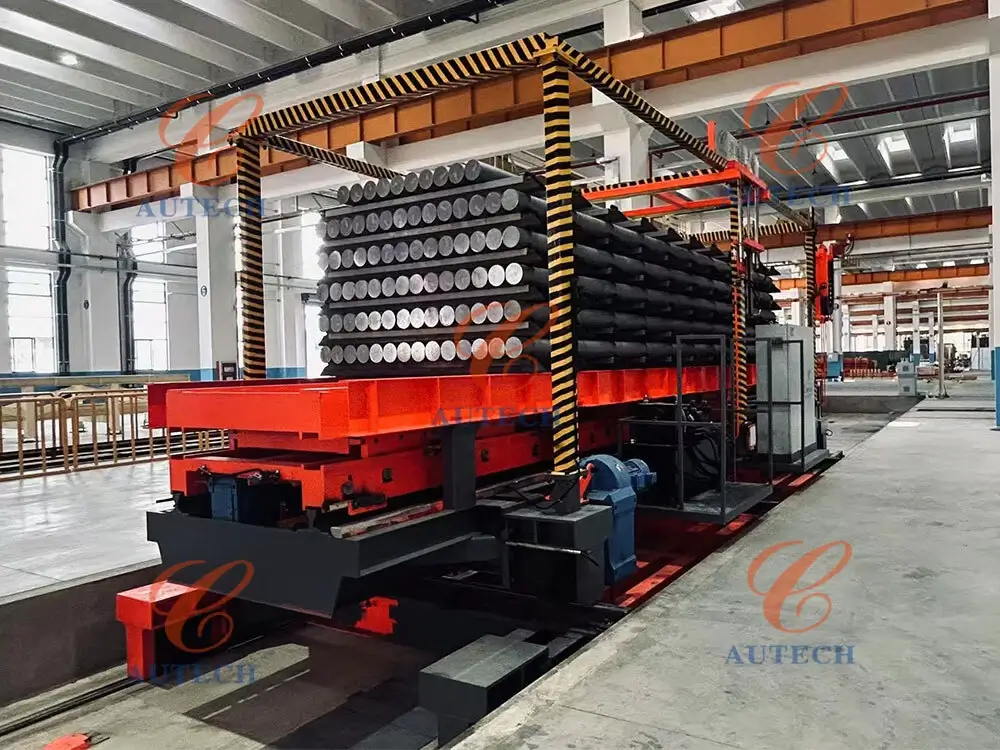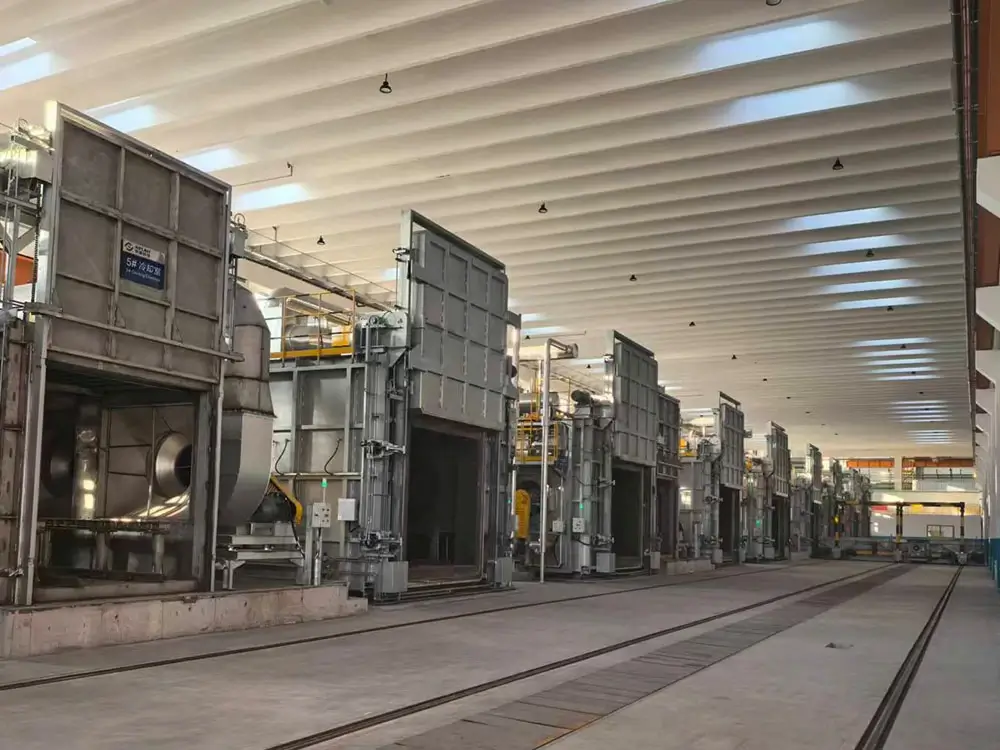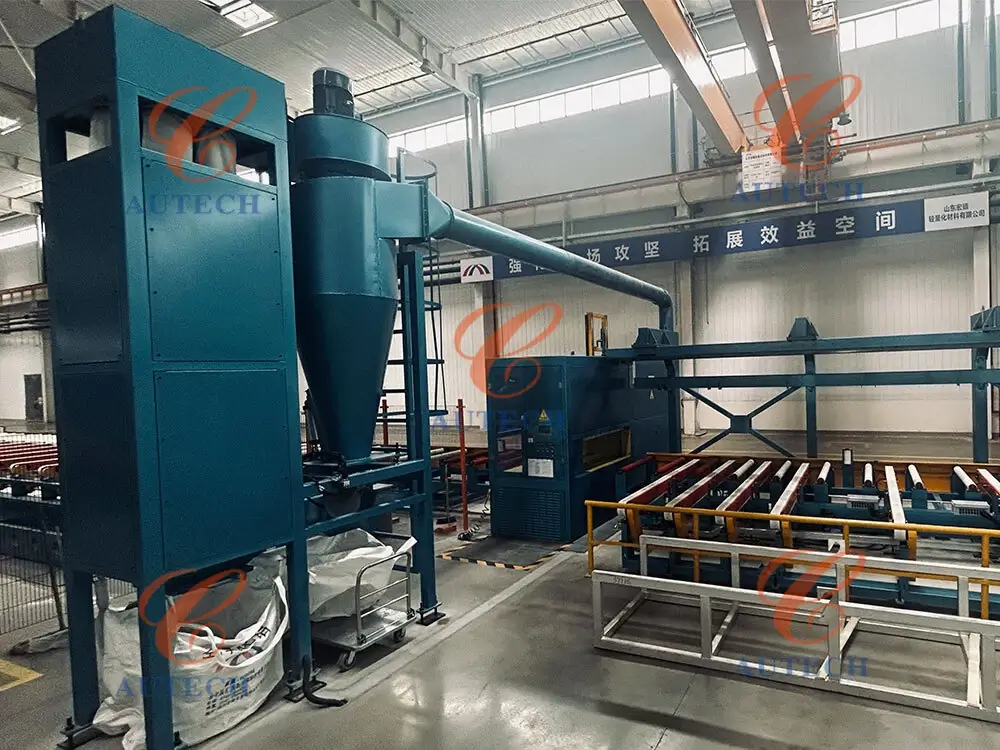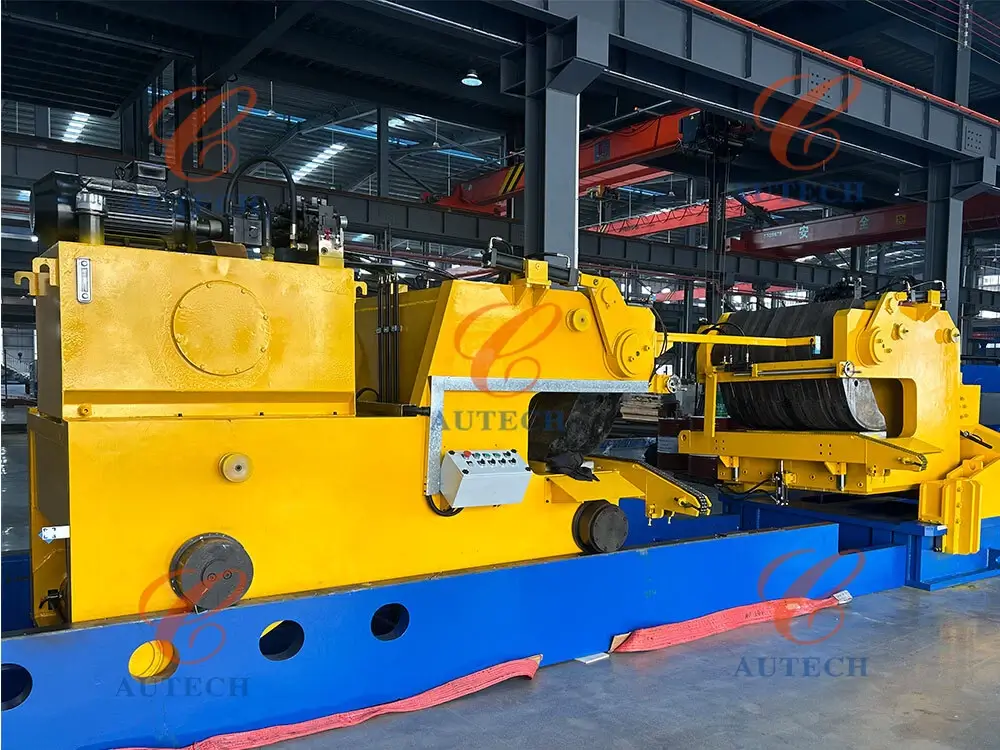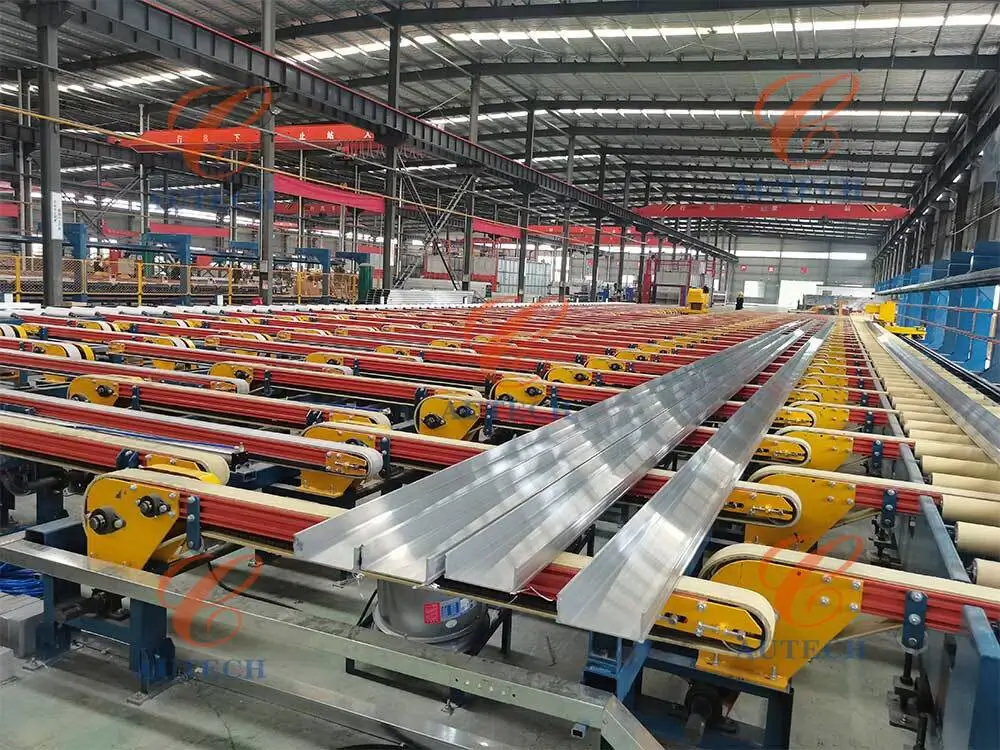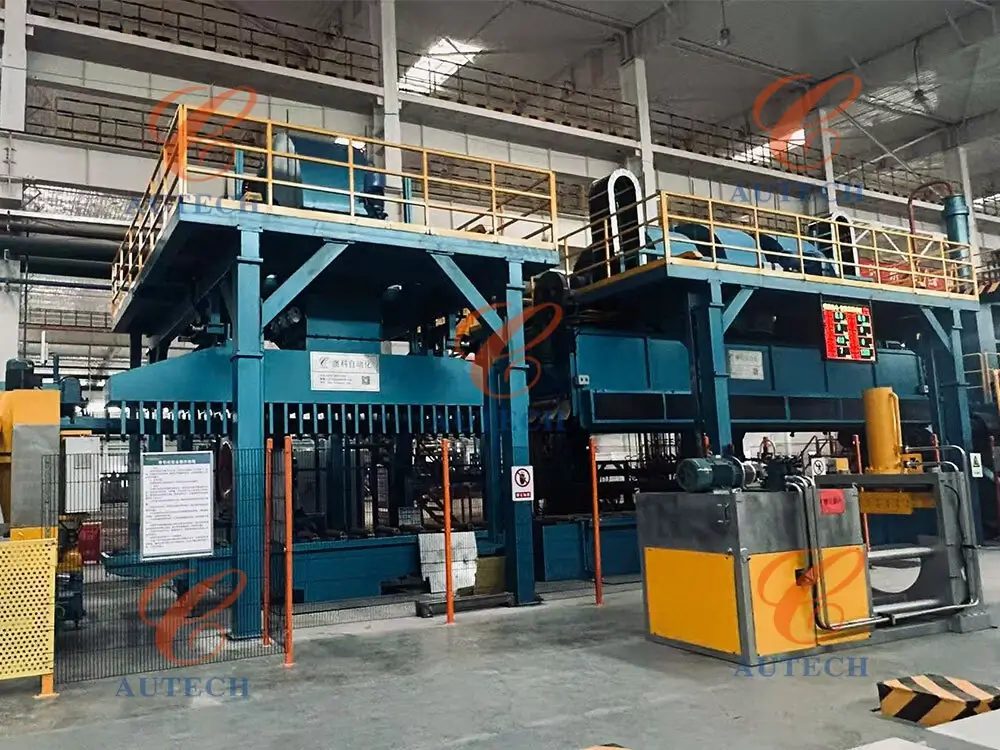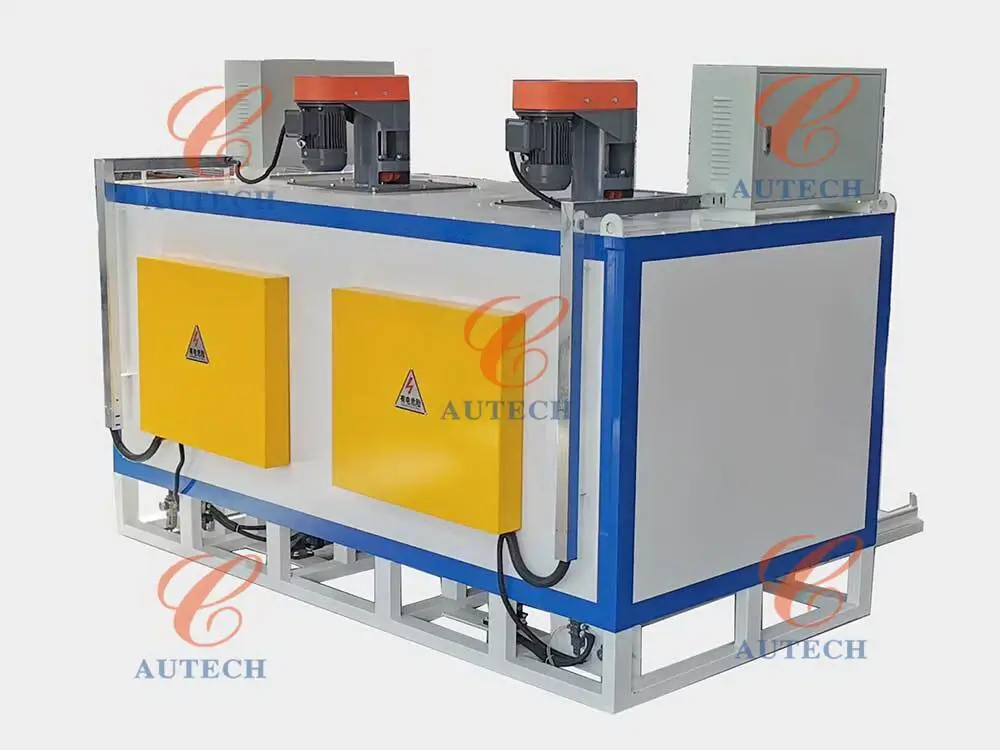

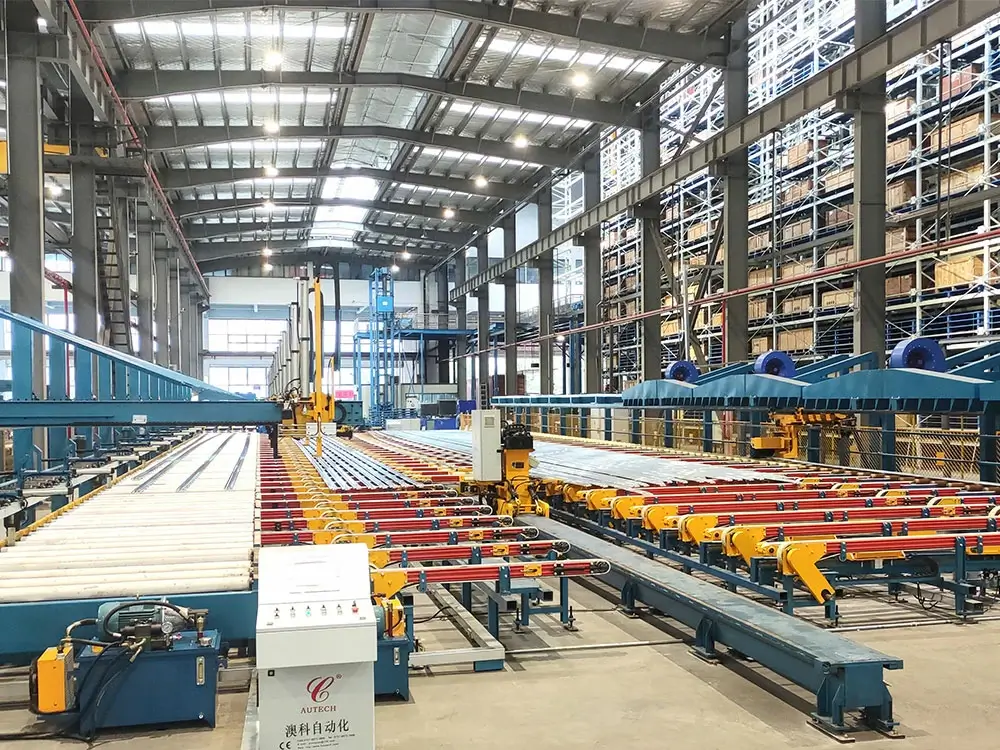
The cooling bed is not just a storage area; it performs several active mechanical processes:
Controlled Cooling: It provides a uniform environment to reduce the profile temperature from roughly 500°C to under 100°C before the next stage.
Lateral Transfer: It uses a “walking beam” or belt mechanism to move profiles sideways across the table, freeing up space for the next extrusion “strand.”
Buffering: It acts as a buffer between the continuous extrusion process and the intermittent stretching and sawing processes.
Surface Protection: It ensures that the soft, hot aluminum does not get scratched or dented while it is still in a “plastic” (malleable) state.
Cooling beds are categorized primarily by the material that touches the aluminum (the “slats” or belts).
A. Felt Belt Cooling Beds (The Standard)
These use high-temperature resistant felt (Kevlar or PBO) belts to move the profiles.
Best for: Standard architectural and decorative profiles where surface finish is critical.
B. Walking Beam Cooling Beds (Heavy Duty)
Uses a mechanical “step” motion where one set of beams lifts the profile and moves it forward.
Best for: 10-inch lines and heavy industrial profiles. These are more robust than felt belts.
C. Graphite Slat Cooling Beds
Uses heat-resistant graphite blocks as the contact surface.
Best for: Very high-temperature applications, though less common now due to the popularity of modern felt materials.
| Type | Felt Belt Systems | Walking Beam Systems |
| Advantages | Zero Scratches: Felt is soft and won’t mark the metal. Flexible: Easy to replace individual belts. | Extreme Durability: Can handle the weight of massive 10-inch industrial beams. High Precision: Better alignment control. |
| Disadvantages | Wear & Tear: Belts can burn or fray over time, requiring replacement. Lower Load: Can sag under extremely heavy industrial profiles. | Mechanical Complexity: Requires more maintenance for the lifting gears/cams. Surface Risk: If not aligned perfectly, metal-to-metal contact can occur. |
| Temperature | Handles up to 550°C (PBO/Kevlar). | Virtually unlimited temperature resistance. |