What Are Aluminum Rod Die Oven? What Are Their Core Functions? What Are The Mainstream Models? What Are Their Advantages And Disadvantages?
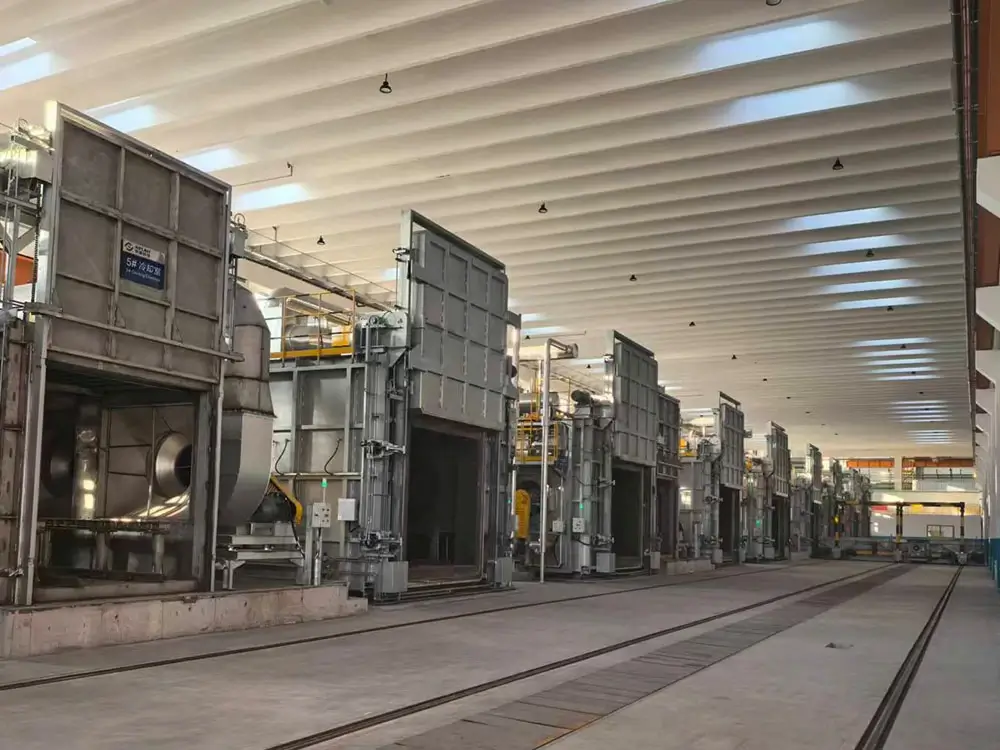
An Aluminum Die Oven is a specialized heating chamber used to preheat extrusion dies to a specific temperature (usually between 425°C and 480°C) before they are loaded into the extrusion press.
In the industry, this is often called the “bridge” between the die shop and the press. Loading a cold die into a hot press would cause the die to shatter under pressure or cause the aluminum to “freeze” instantly, blocking the production line.
Thermal Equilibration: Ensuring the die reaches a uniform temperature throughout its entire mass so that it expands evenly and maintains dimensional accuracy.
Preventing Thermal Shock: If a cold die meets a hot aluminum billet, the temperature difference could cause the steel to crack (brittle failure).
Optimizing Metal Flow: Heating the die ensures that the aluminum flows through the complex channels (mandrels and ports) with minimal friction and consistent speed.
Oxidation Control: Modern ovens use specific atmospheres or precise temperature control to prevent the die surface from scaling or oxidizing, which would ruin the finish of the extruded profile.
2. Mainstream Models
There are two primary designs used in modern production lines: A. Chest-Type (Box) Ovens
The traditional model where multiple dies are placed inside a large heated “chest” or cabinet.
Use Case: Small to medium-sized plants with lower production speeds.
B. Single-Cell (Rapid) Die Ovens (Mainstream)
The current industry standard for high-efficiency lines. Each die has its own individual heating chamber.
Use Case: High-speed automated lines (like 10-inch lines).
How it works: Uses high-velocity air “impact” heating to bring a single die up to temperature much faster than a box oven.
C. Overhead/Top-Loading Ovens
Used for very large, heavy dies (for 12-inch to 20-inch presses) where a crane is required to lower the die into the heating pit.
3. Advantages & Disadvantages
Single-Cell Ovens (Modern)
Advantages
Disadvantages
Precise Timing: Each die has its own timer, ensuring it isn’t “over-baked” (which softens the steel).
Higher Initial Cost: More expensive than a simple box oven due to individual controls.
Energy Efficiency: You only heat the cells you are using, rather than a whole large room.
Maintenance: More moving parts and individual sensors to calibrate.
Nitrogen Purging: Many models allow for a nitrogen atmosphere to keep the dies perfectly clean.
Chest-Type Ovens (Traditional)
Advantages
Disadvantages
Simple & Rugged: Very few mechanical parts to break down.
“First-In, Last-Out” Problems: Hard to track exactly how long each die has been inside.
Lower Cost: Cheaper to manufacture and install.
Heat Loss: Every time the large door opens, a massive amount of heat escapes.
High Capacity: Can hold a large volume of dies simultaneously.
Over-heating Risk: Dies left inside too long can lose their hardness (tempering).
Contents
What We Provide!
We are the best manufacturer of the products and can provide professional solutions for you. Please feel free to contact us for a quick quote now!